Library and Bookstore Lighting: Light the Spines, Then the Reader
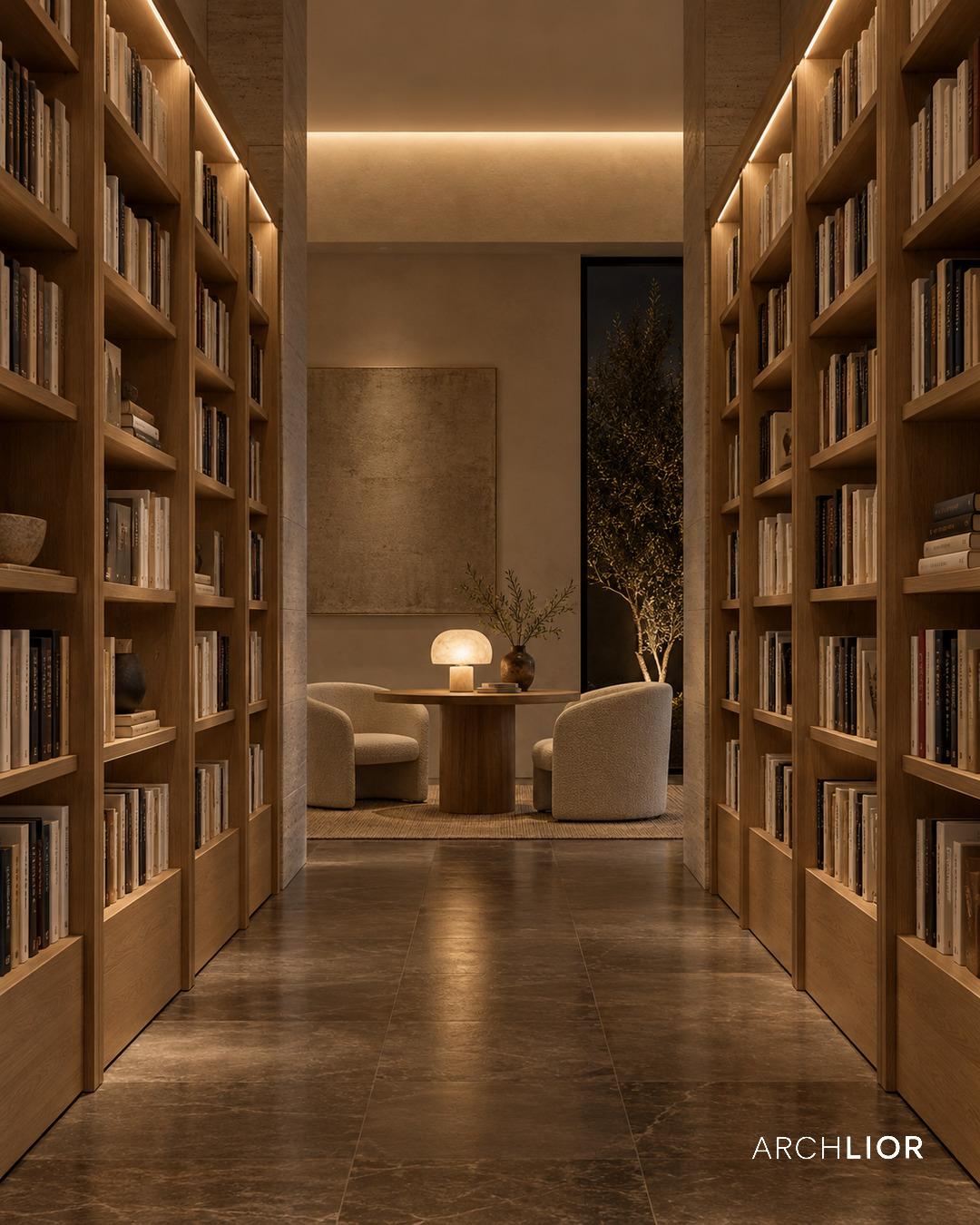
Libraries and bookstores look similar on a plan: rows of shelves, tables, a counter. They are lit for opposite reasons. A bookstore is retail that happens to sell books, and it is lit to make covers sell. A library is a reading room wrapped around an archive, and it is lit to make spines findable, pages comfortable and paper survive. Confuse the two and you get a bookstore nobody browses or a library nobody reads in.
This guide covers both, because most projects are a bit of each.
The Shelf: Vertical Light on the Spine
Books present their spines to the room, so the working surface of a library is vertical. BS EN 12464-1, the European standard for indoor workplace lighting, lists 200 lx for bookshelves, with the measurement taken on the vertical plane of the shelf face. That one fact reorients the whole layout: a grid of downlights between the stacks delivers its light to the carpet and the top shelf, and leaves the lower shelves in shadow.
The practical answer is to light the aisle from the shelf, not over it. Linear fittings mounted at the top of the bookcase, or continuous runs aligned with the stacks, wash the spine faces evenly from top to bottom. Where fittings run across the aisles instead, check the lowest shelf at the farthest stack, not the average on the floor: that corner is where the scheme actually lives or dies.
Shelves also create their own weather. A deep bookcase lit from the aisle puts each shelf's contents in the shadow of the shelf above, which is why our shelf and alcove guide argues for lighting books from the front edge rather than from behind. Integrated shelf lighting solves locally what aisle lighting cannot solve at all.
The Reading Table: 500 Lux and No Glare
Reading is a documented task with a number attached. BS EN 12464-1 lists 500 lx for reading areas, with a glare limit of UGR 19 and colour rendering of Ra 80; counters sit at 500 lx as well, since they double as search and service desks. The same values apply whether the room is a public library, a university reading room or the corner of a bookshop with a sofa.
Glare matters more in a reading room than almost anywhere else, because the reader holds the task at a fixed angle for an hour at a time. A bright source reflected in a glossy page is not a nuisance you blink away; it is a reason to move seats. Large, shielded or indirect sources over tables, and matte rather than gloss finishes on tabletops, keep the page readable without raising the wattage.
The Archive: Light Is Cumulative Damage
Paper does not recover. Conservation guidance is blunt about it: visible and ultraviolet light cause fading, yellowing, weakening and embrittlement of paper, textiles, leather and adhesives, and the damage is irreversible and cumulative. Exposure is measured in lux hours, intensity multiplied by time, which means a dim light left on forever does the same harm as a bright light briefly.
The CCAHA's exhibition guidance gives working figures: 50 to 100 lux for light-sensitive objects on display, a maximum ultraviolet content of 75 microwatts per lumen, and for very light-sensitive materials such as works on paper, watercolour and photographs, a total exposure budget of about 50,000 lux hours per year. Museums live by these numbers, and any library with a special collection, a display case or an archive room should borrow the discipline: keep storage dark, display facsimiles where you can, and control daylight before you add electric light.
For the ordinary lending collection, the threat is slower but real. Rows of books under a sunlit window fade spine by spine. Shading, UV-filtering film and simply not aiming accent spots at shelving do more for preservation than any fitting specification.
The Bookstore: Retail Rules Apply
A bookstore has no preservation duty to its stock; it has a sales duty. BS EN 12464-1 lists 300 lx for retail sales areas and 500 lx at the till, and retail practice builds the hierarchy on top: face-out display tables and the bestseller wall get accent light, the spine-out shelves get the vertical treatment described above, and the whole floor stays warm enough that people linger.
Covers, unlike spines, are printed in full colour and often laminated. Gloss lamination reflects sources back at the browser, so light covers at an angle rather than straight on, and keep colour rendering high, at Ra 90 or above, so cover art reads as the publisher intended. Our retail lighting guide covers the boutique hierarchy of window, wall and table in more detail.
The Human Corners
Every good library has them: the children's corner, the newspaper chairs, the study carrels, the events floor after closing. Each is a small scene. Carrels want local task light with no spill into the neighbour's page; the children's corner wants robust fittings at untouchable heights; events want the stack lighting dimmed and a wash on the speaker wall. If the room changes character between day and evening, give it scenes on a simple control, not a row of switches nobody understands.
Checklist
- Shelves measured on the vertical plane: 200 lx per BS EN 12464-1, checked on the lowest shelf of the farthest stack.
- Reading areas and counters at 500 lx, UGR 19, with shielded or indirect sources that keep reflections out of glossy pages.
- Daylight assessed as both a resource and a conservation risk; shading and UV control where sun reaches shelving.
- Special collections on a lux hour budget: 50 to 100 lux on display, UV below 75 microwatts per lumen, dark storage.
- Bookstore displays lit at an angle to manage gloss lamination, with Ra 90 or above on cover displays.
- Carrels, children's and events zones each given their own layer and scene.
Five Mistakes
- A downlight grid between the stacks. It lights the floor and the top shelf and abandons the rest.
- Judging the aisle from the middle. The worst shelf, not the average lux, is the design.
- Treating sunlight as free light. Every hour of sun on a spine is spend from a preservation budget that does not refill.
- Lighting a bookshop like a warehouse. Face-out tables and covers sell books; they need accent light and good colour rendering, not just a bright floor.
- One switching circuit for the whole room. A library that cannot dim its stacks for an evening event will hold events in the dark or not at all.
Frequently Asked Questions
How many lux does a library need? BS EN 12464-1 lists 200 lx on bookshelves, measured on the vertical face of the shelf, and 500 lx for reading areas and counters, with a glare limit of UGR 19 for reading tasks.
Does light really damage books? Yes. Conservation research describes fading, yellowing, weakening and embrittlement of paper and bindings from both visible and ultraviolet light, and the damage is cumulative and irreversible. Exposure is measured in lux hours: intensity multiplied by time.
How should rare books be displayed? Conservation guidance for light-sensitive materials recommends 50 to 100 lux on display, ultraviolet content below 75 microwatts per lumen, and a cumulative budget of about 50,000 lux hours per year for very light-sensitive materials such as works on paper. Dark storage between displays and facsimiles for long exhibitions reduce the dose further.
Is LED lighting safe for books? LEDs emit negligible ultraviolet compared with daylight or halogen sources, which removes one damage mechanism. Visible light still causes cumulative damage, so exposure time and intensity still need managing for sensitive collections.
What is the difference between bookstore and library lighting? A bookstore is retail: BS EN 12464-1 retail levels of 300 lx on the sales floor and 500 lx at the till, with accent hierarchy on displays. A library is a reading room and an archive: vertical 200 lx on shelves, 500 lx glare-controlled reading light, and exposure budgets for anything worth preserving.
Sources and further reading
- BSI. BS EN 12464-1, Light and lighting. Lighting of work places, indoor work places: illuminance, glare and colour rendering requirements for library bookshelves, reading areas, counters and retail premises.
- CCAHA (Conservation Center for Art & Historic Artifacts). Light Exposure for Artifacts on Exhibition: 50 to 100 lux for sensitive objects, 75 microwatts per lumen ultraviolet limit, and 50,000 lux hours per year for very light-sensitive materials.
- National Preservation Office. Guidance for Exhibiting Archive and Library Materials: light, ultraviolet and exposure management for library and archive displays.
- Archlior. Museum and Gallery Lighting: The Annual Budget Nobody Mentions; Shelf and Alcove Lighting: Light the Books, Not the Shelves; Retail Lighting Design: How Top Boutiques Drive Customer Experience.
Notice
This article is for general information, not project-specific design, engineering, electrical-safety or medical advice. Examples are illustrative and do not guarantee performance, compliance or health outcomes. Verify current specifications and applicable requirements with manufacturers and qualified professionals before purchase or installation. To the extent permitted by law, Archlior accepts no liability for loss arising from reliance on this content. Nothing here excludes liability that cannot lawfully be excluded.