Yoga Studio Lighting Design: Plan for People Looking at the Ceiling
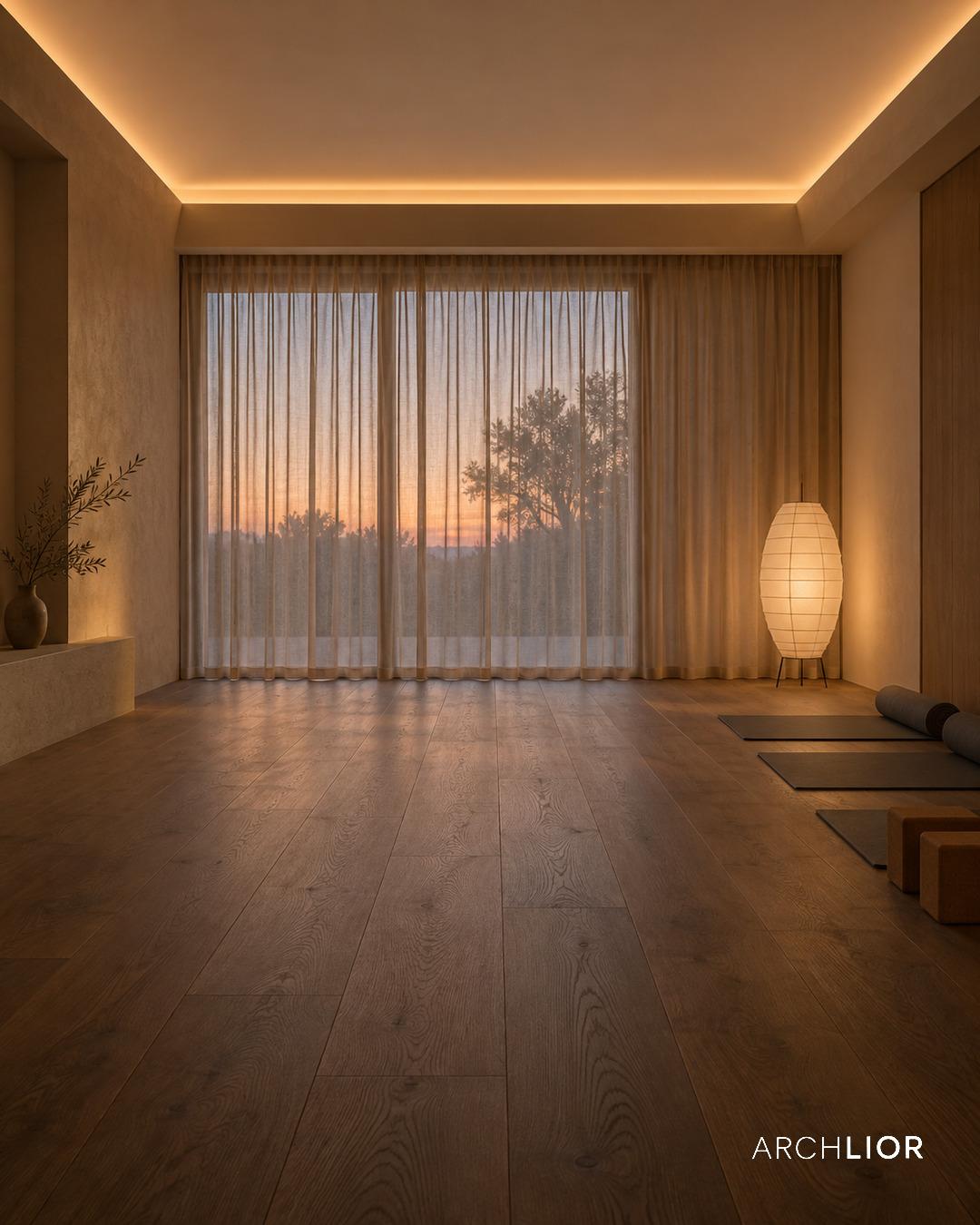
Most rooms are used upright, looking ahead. A yoga studio is used lying down, upside down and on one leg with eyes half closed. For a full hour, the ceiling is the view. That single fact should organise the entire lighting design, and it is the one most fit-outs ignore.
This guide covers the practice room, the arrival and changing spaces, and the numbers and rules an architect should check.
The Practice Room: The Ceiling Is the Elevation
In a gym, members move between machines and mostly face a mirror or a screen; our gym lighting guide zones that room by activity. A yoga or Pilates studio has one activity in one volume, and the occupant's gaze goes up: in savasana, in supine twists, in every floor-based stretch. A grid of downlights that reads as pleasantly bright when standing becomes a row of glinting apertures when you are on your back.
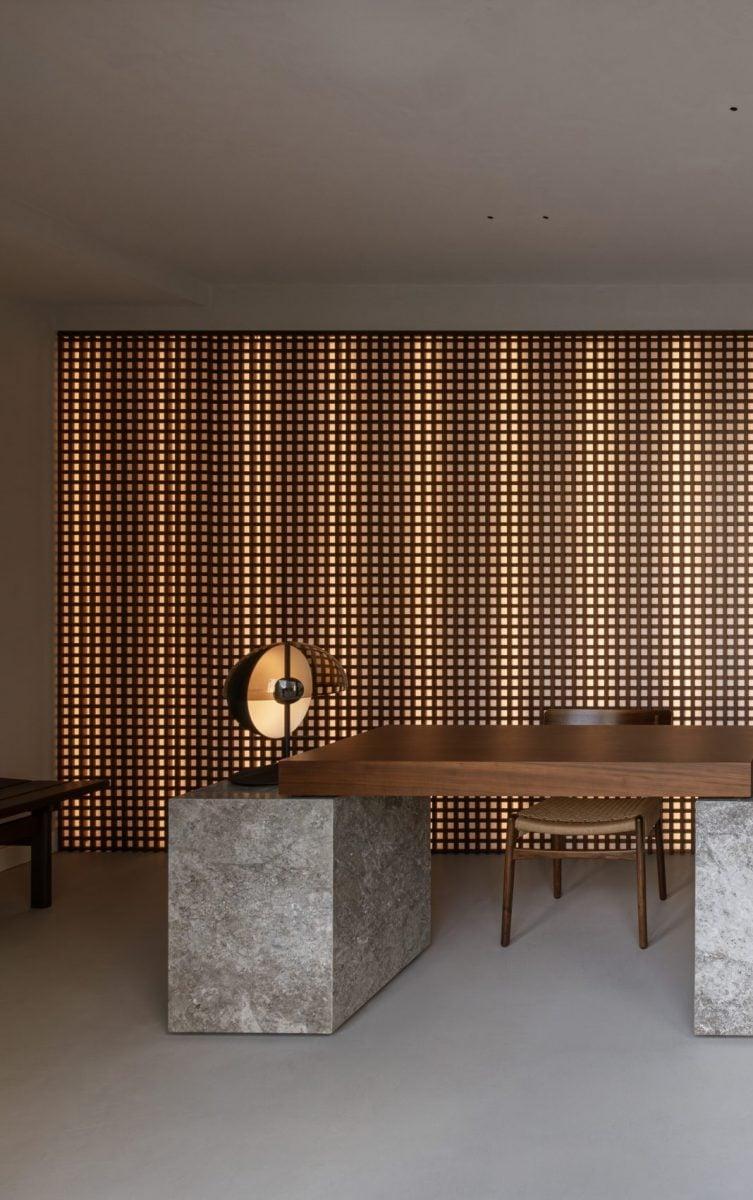
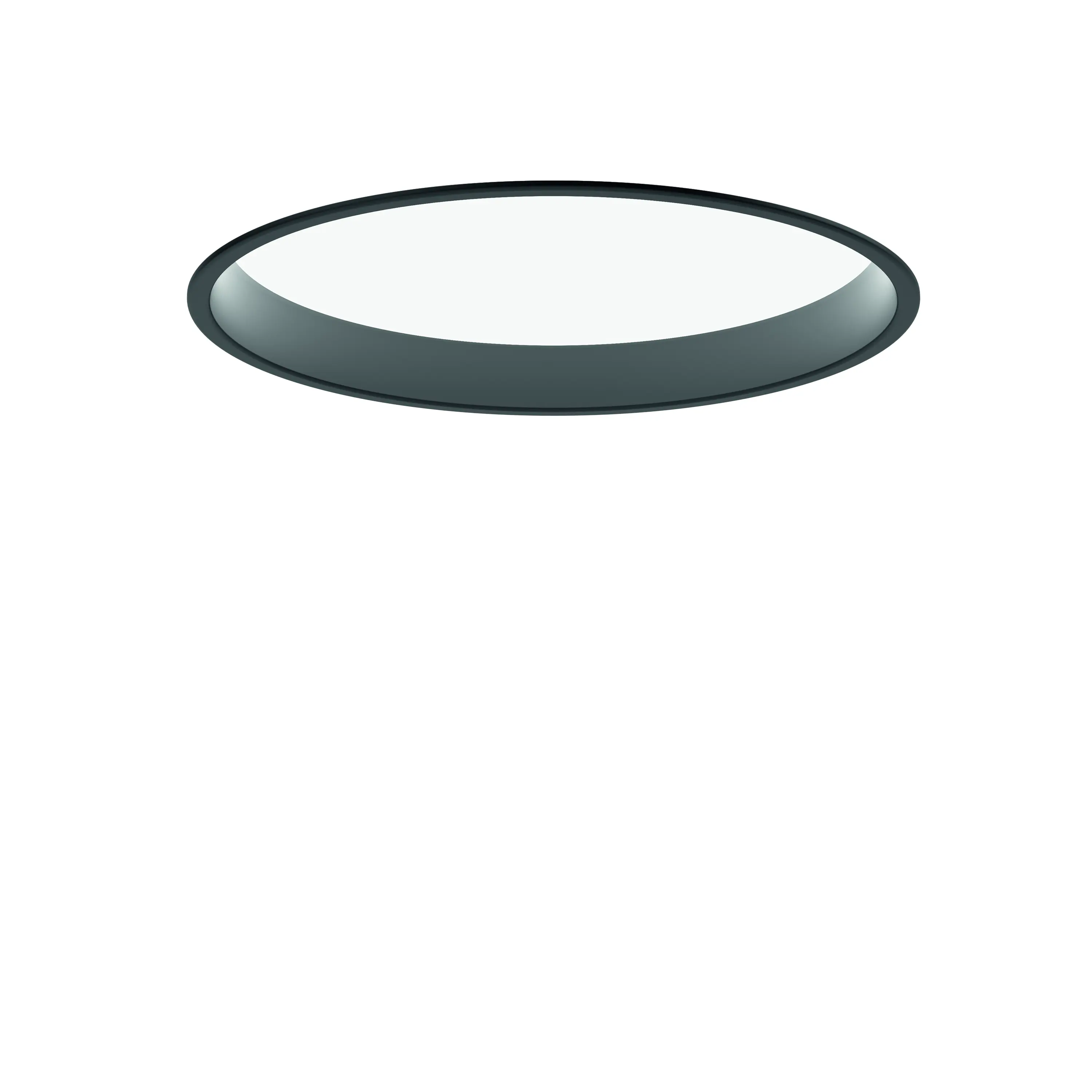
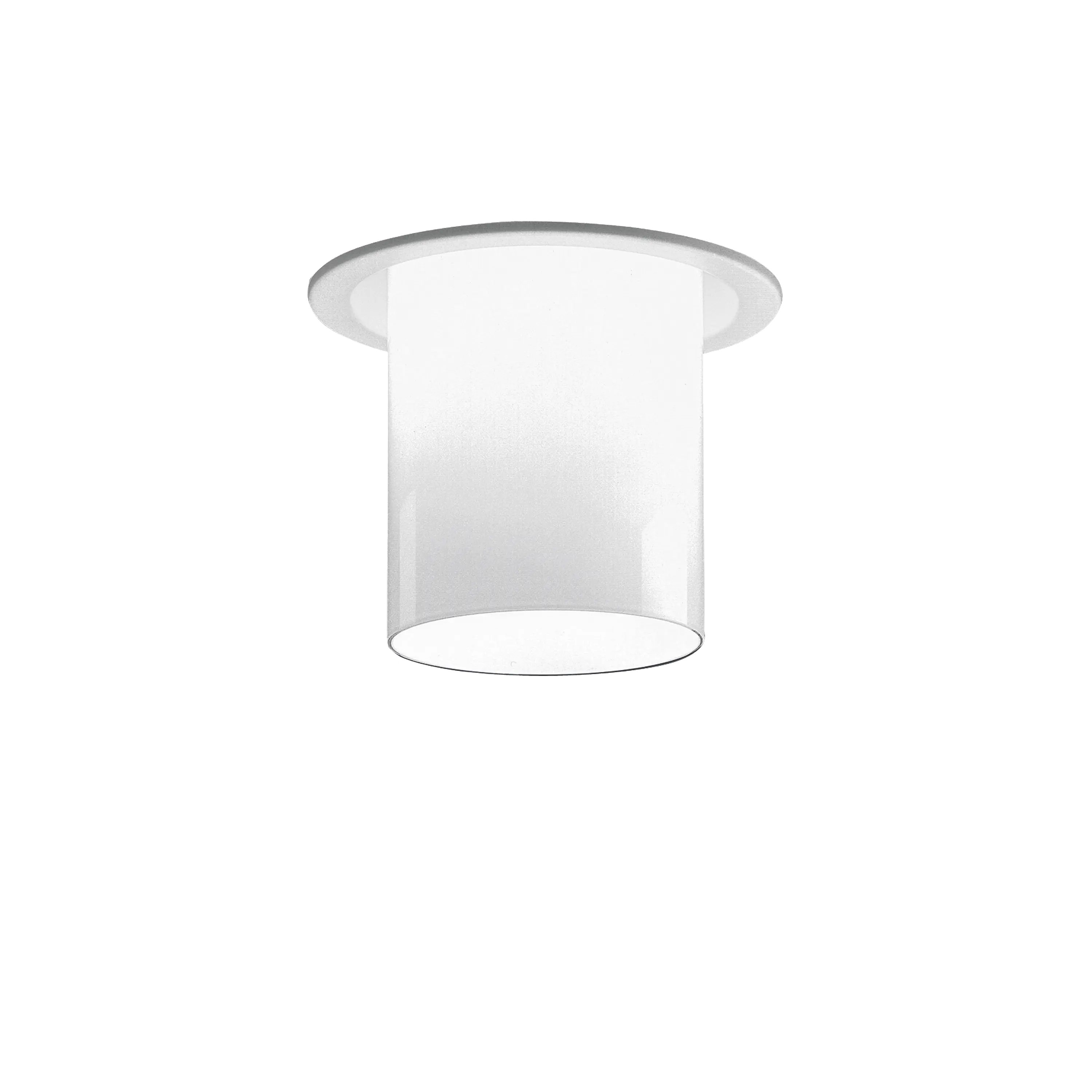
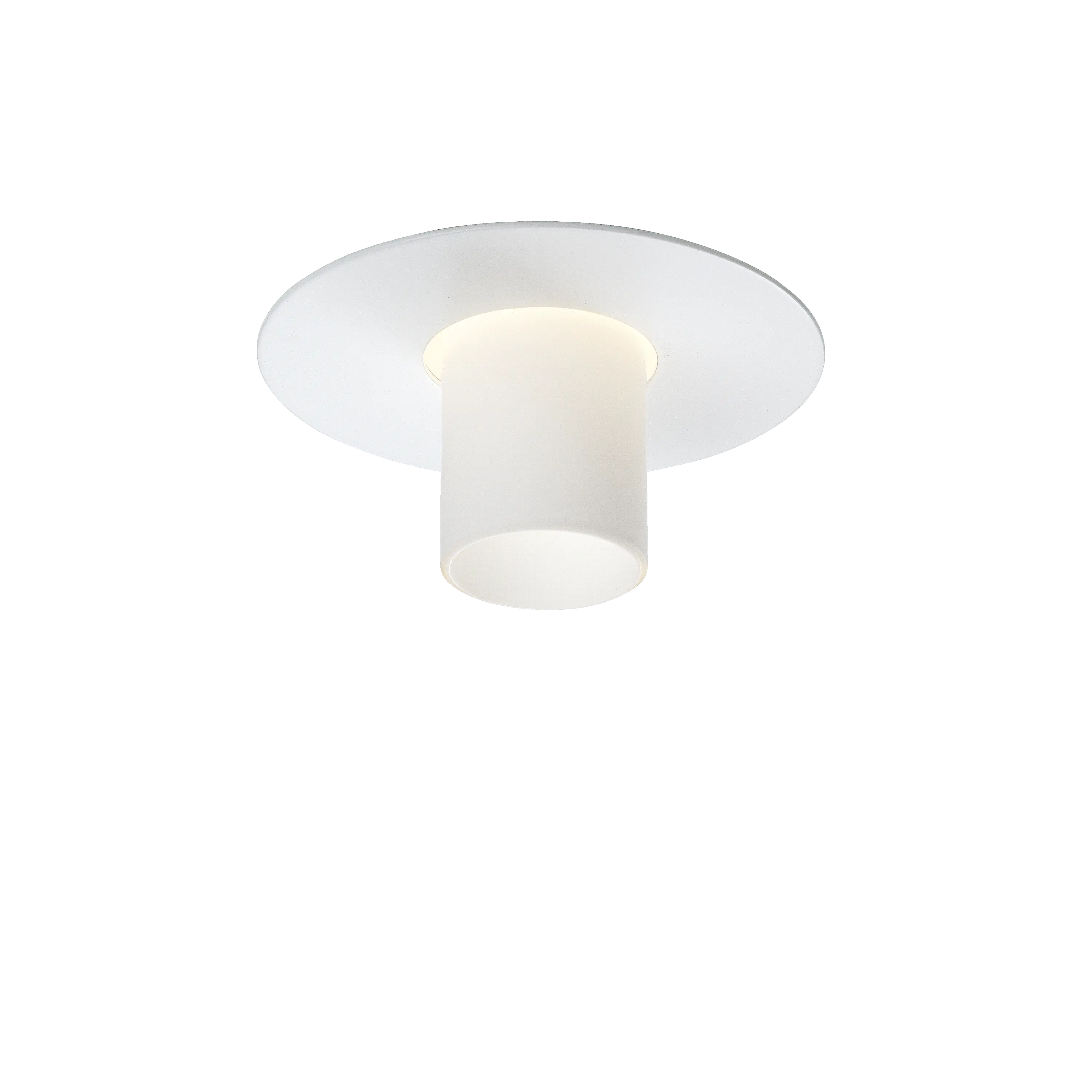
The practical answer is indirect light. Coves, wall washers and pendants with an upward component put light on the ceiling and walls, so the surfaces the student actually looks at are lit softly and the sources themselves stay out of the sightline. Where downlights must be used, keep them to the edges, out of the mat zone, and glare-rated for a room where the viewer cannot look away.
How bright? For the physical task, yoga is undemanding: students need to see the instructor, their own alignment and the floor around them. BS EN 12464-1 lists 300 lx for sports halls and gymnasiums, and EN 12193 covers sports lighting more broadly; a practice studio can reasonably work at or below that level, because balance and concentration suffer under glare sooner than they suffer under modest light. What the room needs is not power but range.
Range Is the Design
A studio class has a lighting arc. Arrival and warm-up want a comfortable working level. Flow wants even, calm, general light. The final ten minutes want the room to sink almost to candlelight, with students supine and eyes closed. A scheme that cannot dim smoothly to a few percent of full output, without flicker or steps, cannot do the job, and a scheme that snaps off at the end of class undoes the previous hour.
That range has to be specified, not assumed. Two things to verify before you commit: the driver and control combination dims to low levels smoothly and without visible flicker, because flicker that nobody notices standing at a bench can be disturbing when the room is nearly dark; and the lowest stable level is genuinely low. Our dimming and controls guide explains why fittings and dimmers that look compatible on paper still flicker in the room.
Colour temperature follows the same arc. Warm white, around 2700K, suits the evening wind-down; some studios run a slightly cooler, neutral white for energetic morning classes. Tunable white fittings can carry both, but they add cost and control complexity, and a simple warm dimmable scheme covers most timetables. Whatever you choose, keep one colour temperature per scene and per sightline.
Arrival, Retail and Changing
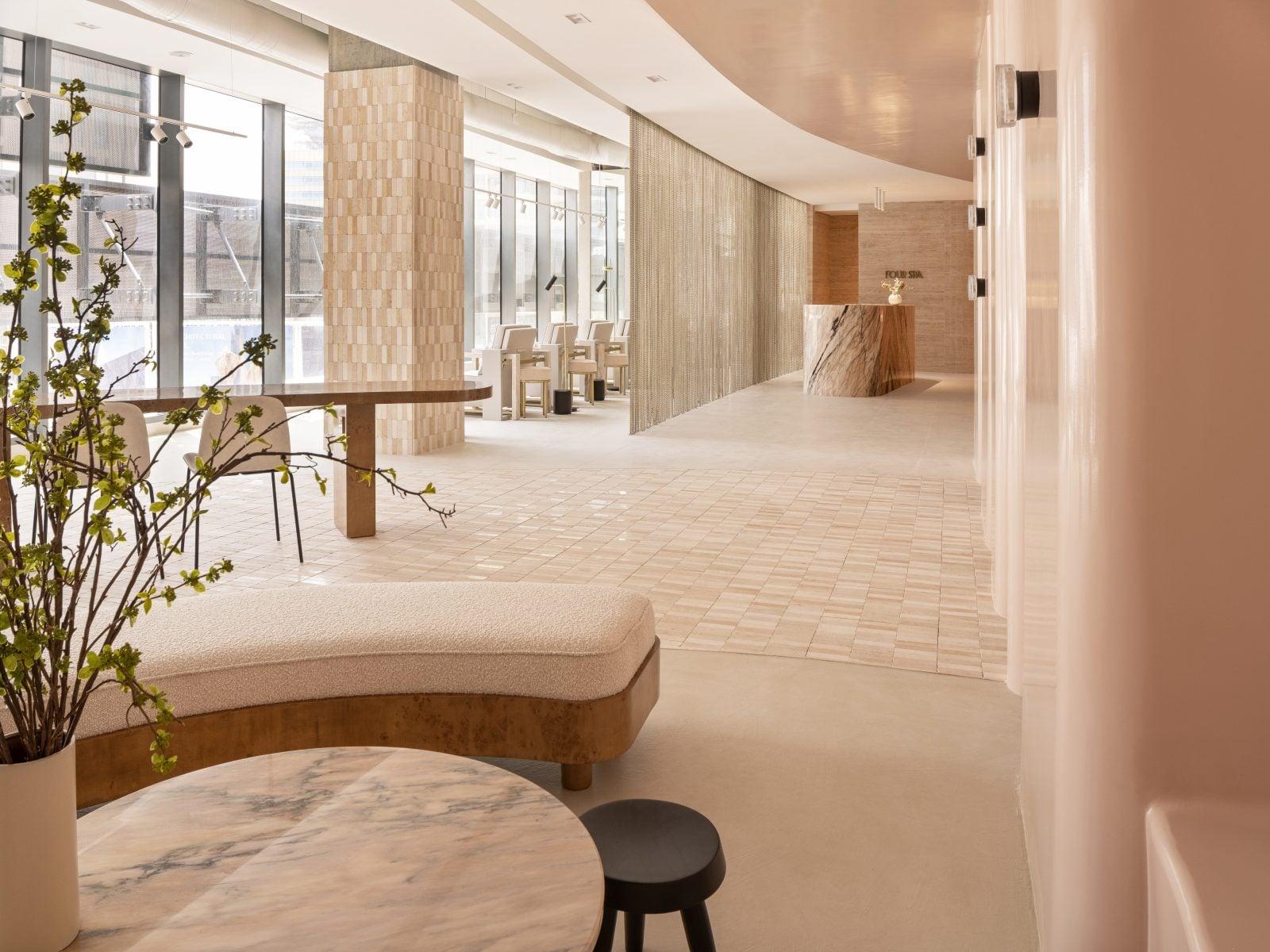
The studio starts at the door. Reception is a check-in desk and often a small shop: BS EN 12464-1 lists 300 lx for retail sales areas and 500 lx at tills and counters, and that counter is also where new students fill in forms, so light it for paperwork as well as payment. The retail wall wants the same accent hierarchy as any boutique: light the shelf faces vertically, keep colour rendering honest.
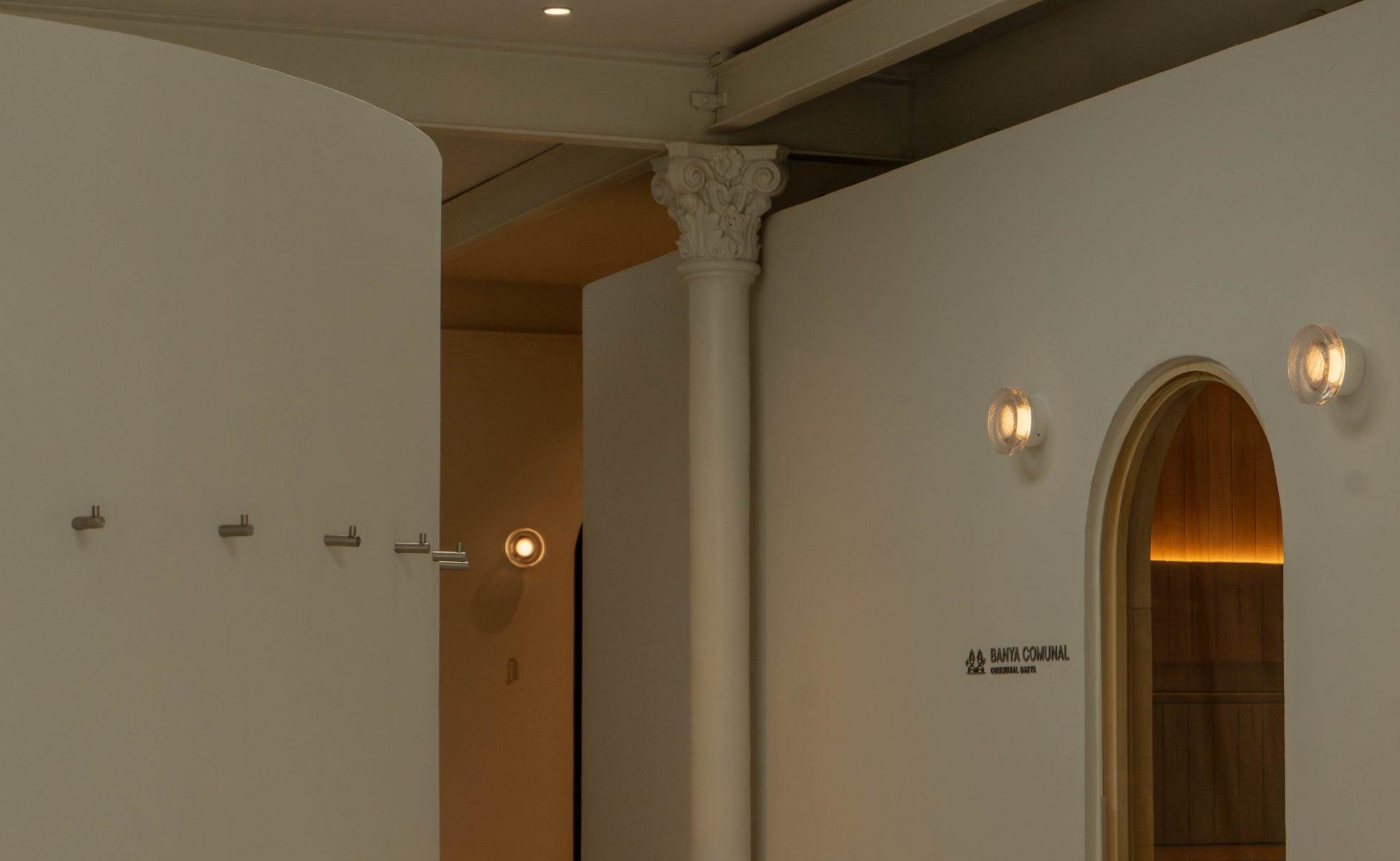
Changing rooms and corridors are transition spaces, and transitions matter here more than elsewhere: students walk from a bright street into a dim practice room and back out an hour later. Keep circulation light low and even rather than theatrical, and avoid the classic mistake of a dark corridor opening onto a dazzling lobby.
Mirrors need a mention because most studios have at least one wall of them. Light the person, not the mirror: sources aimed at the glass come straight back at eye level. Soft frontal light on the body, from above and to the sides, is what lets a student check alignment without squinting.
The Practical Layer
A studio is a workplace too. Instructors demonstrate, adjust and clean; the floor is a continuous task surface where mats, blocks and straps are trip hazards between classes. Cleaning and setup happen at full output, so the top end of the dimming range matters as much as the bottom.
Escape routes need emergency lighting whatever mood the class is in. In the UK, BS 5266-1 is the code of practice for emergency lighting design, and the duties under fire safety legislation apply regardless of how dim the relaxation scene runs. Check how the scheme behaves when mains power fails mid-savasana: a room of people lying on the floor in the dark is exactly what emergency lighting exists for.
If the studio has windows, treat daylight as a guest, not a system. A west-facing studio is glorious at six in the morning and unusable at six in the evening without shading; plan blinds with the same care as the fittings, and make sure the evening scene works with the blinds closed.
Checklist
- Practice room lit indirectly where possible: coves, wall washing or uplight, so the ceiling students stare at is soft and source-free.
- Downlights kept out of the mat zone or glare-rated for supine viewing.
- Smooth, flicker-free dimming verified down to a very low stable level, driver and control tested together before handover.
- One colour temperature per scene; tunable white only if the timetable genuinely needs it.
- Reception and retail counter lit as a workplace: around 300 lx sales area, 500 lx at the counter, per BS EN 12464-1.
- Mirrors lit for the person in front of them, never aimed at the glass.
- Emergency lighting coordinated with the dimming scenes and checked against BS 5266-1 and local fire safety duties.
Five Mistakes
- A downlight grid over the mats. For anyone lying on their back, that is the whole view.
- Specifying dimmable fittings without testing the driver and control together. Flicker at low level is the most common complaint in studio refits.
- A minimum dim level that is not low enough. If savasana runs at 30 percent, the room never lands.
- Mixing colour temperatures between scenes or within one view. Students read it as chaos, not variety.
- Designing the practice room and forgetting the corridor. The transition from street to studio is part of the class.
Frequently Asked Questions
How bright should a yoga studio be? There is no yoga-specific standard. BS EN 12464-1 lists 300 lx for sports halls and gymnasiums, and a practice studio can work at or below that, because the task is low-demand and glare harms concentration sooner than modest light does. What matters more than the top level is the dimming range down to near-darkness for relaxation.
What colour temperature is best for a yoga studio? There is no mandated figure. Warm white around 2700K suits evening and restorative classes; some studios use a neutral white for energetic morning sessions. Keep one colour temperature per scene and per sightline, and choose tunable white only if the timetable genuinely needs both.
Why do downlights cause problems in yoga studios? Because students spend much of the class supine or inverted, facing the ceiling. Sources that are comfortable to stand under can glare directly into the eyes of someone lying beneath them, with no way to look away. Indirect light, or downlights kept out of the mat zone, avoids the problem.
Does a yoga studio need emergency lighting? Where escape routes require illumination, yes. In the UK, BS 5266-1 is the code of practice for emergency lighting design, and fire safety duties apply whatever level the class scene runs at. Check what the room does on mains failure when it is full of people lying on the floor.
Can you use candles or open flames instead of dimmed light? Open flames bring their own fire safety and insurance questions, especially in a room of people on the floor with eyes closed; check with the venue's fire risk assessment and insurer. Very low-level dimmed electric light achieves the same atmosphere without them.
Sources and further reading
- BSI. BS EN 12464-1, Light and lighting. Lighting of work places, indoor work places: illuminance and glare requirements for sports halls, gymnasiums, retail areas and counters.
- BSI. BS EN 12193, Light and lighting. Sports lighting.
- BSI. BS 5266-1, Emergency lighting of premises, code of practice.
- Archlior. Gym and Fitness Center Lighting Design: A Zone-by-Zone Specification Guide; Spa Lighting Design: Light for a Guest Who Is Lying Down; Dimming and Lighting Controls: Why Good Fixtures Still Flicker.
Notice
This article is for general information, not project-specific design, engineering, electrical-safety or medical advice. Examples are illustrative and do not guarantee performance, compliance or health outcomes. Verify current specifications and applicable requirements with manufacturers and qualified professionals before purchase or installation. To the extent permitted by law, Archlior accepts no liability for loss arising from reliance on this content. Nothing here excludes liability that cannot lawfully be excluded.